
Amazon Business
B2B account architecture
The short version
The deets
Role: UX Lead (onsite)
Skills: System architecture, stakeholder management
Scope: Redesign of global account structure
Duration: July 2018 - Nov. 2018
Result: Holistic, scalable solution with phased adoption
The backstory
Amazon Business launched in 2015 and has been one of Amazon's fastest growing business units, reporting nearly $3b in sales the first year and growing to $13b (US) as of 2019, currently estimated at over $50b. The concept is to make large scale B2B procurement as simple as shopping on Amazon as a consumer and bring Amazon's significant logistics capabilities into the B2B space. From the beginning, we aimed to serve the smallest of businesses alongside large global organizations across a range of verticals including, but not limited to, education, medical, government, and manufacturing.
What's the problem?
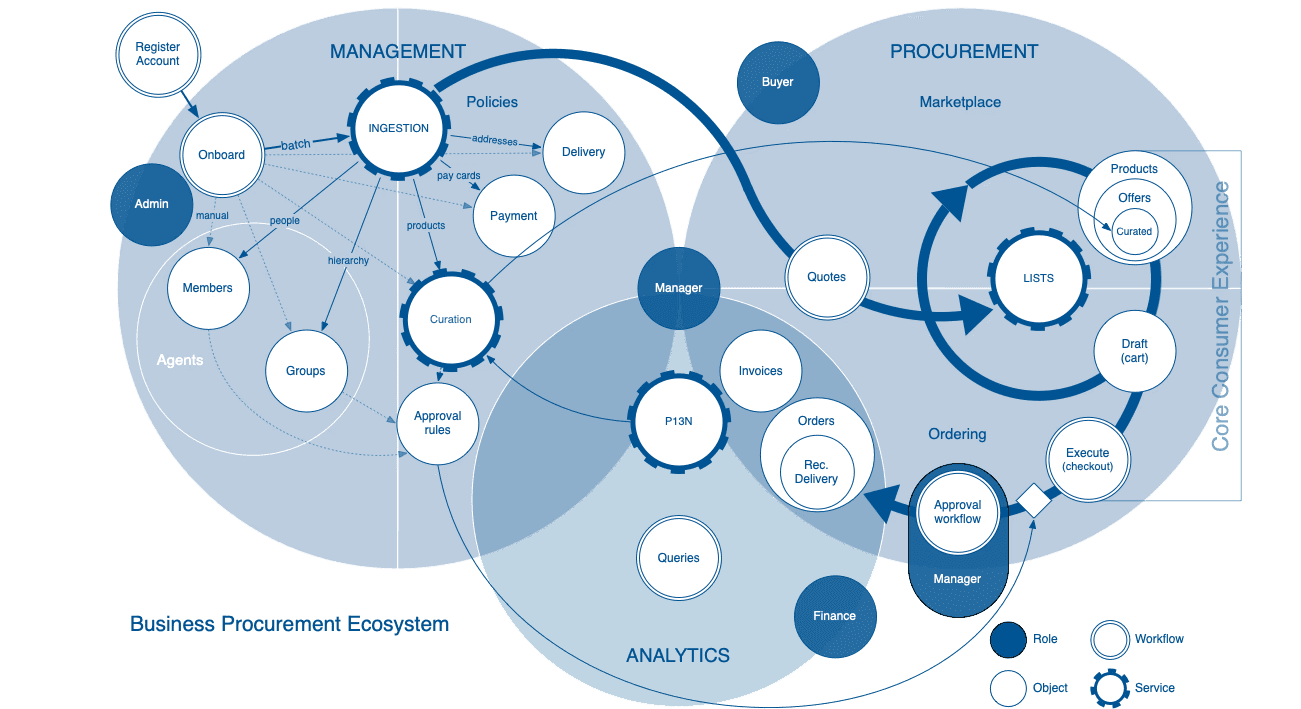
In our rush to market we made quick decisions with scrappy implementations. As we scaled, problems began to surface. The account structure based on the consumer site wasn't able to accommodate large complex organizations and their processes without layers of workarounds and significant manual effort.
Our bottom-up policy that would allow individual departments to engage with us and then later be merged into full corporate accounts was generating duplicate records and required full manual account rebuilds. Workflows were manual without any established hierarchy or authority, orders would simply expire due to broken communication chains.
Where I come in…
I joined the team in late 2013 as the 3rd UX designer working on the launch effort, then transitioned to management to grow the team to over 30 people as we opened additional UX studios in Austin and Madrid. Finally, I moved into the role of UX Lead for approval policies and delivery experience. As the most senior team member with deep knowledge of all areas and features in our B2B ecosystem, I was well-suited to lead the exploration and drive consensus with our many product and engineering teams on a new architecture.
What I did…


With my experience on the team, I was able to immediately begin synthesis of known issues. Additionally, I facilitated cross-functional workshops with multiple teams to explore their use cases and reviewed existing research and documentation.
Gathering issues and metrics
Anecdotes from customer service and sales
Collaborative sessions with product teams
Brainstorming with engineering teams
Coordinating with design teams


How it worked out…
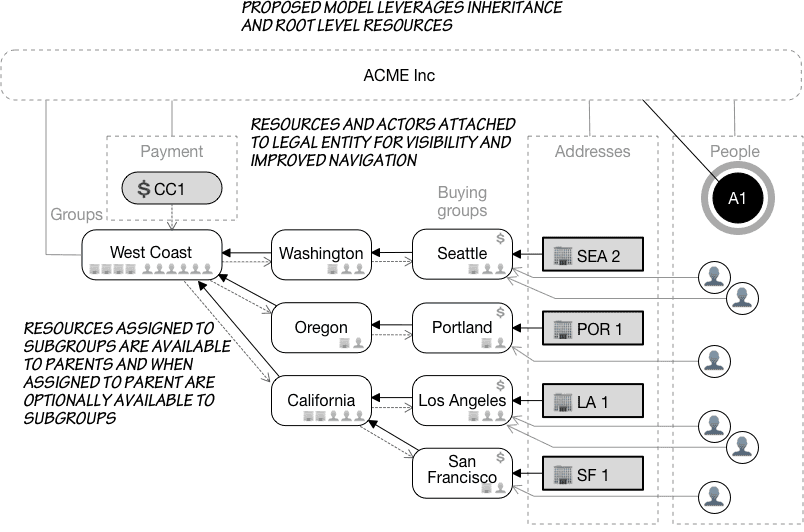
I was able to drive consensus for a viable model, but it would have to be a phased rollout over multiple years.
This was my last project with the team, so I wasn't involved in the implementation or measuring success. I do know that the visualizations I created were effective and used by other designers and product teams long after I left. While I can't share quantified impacts, these are the success metrics I would use to measure:
Unblocking of features and customers
Reduction in manual effort onboarding new customers
Reduction in support calls for account changes
Significant reduction of expired approval requests
Elimination of orphaned and duplicate entities

The takeaway
This project reminded me of the fable of the six blind men trying to describe an elephant. Each team had their own needs, challenges, and perspectives without the advantage of a holistic view. Getting partners to step back from their immediate needs and to think about sustainable long-term solutions instead of quick workarounds was challenging.
My takeaway is to always engage by listening first, never assume everyone is starting from the same place and always ask people to confirm their understanding to ensure we have true alignment.